- Package GEO as audit → quick wins → monthly retainer, not as a vague add-on
- Price the audit as a one-shot foot in the door, the retainer as the real business
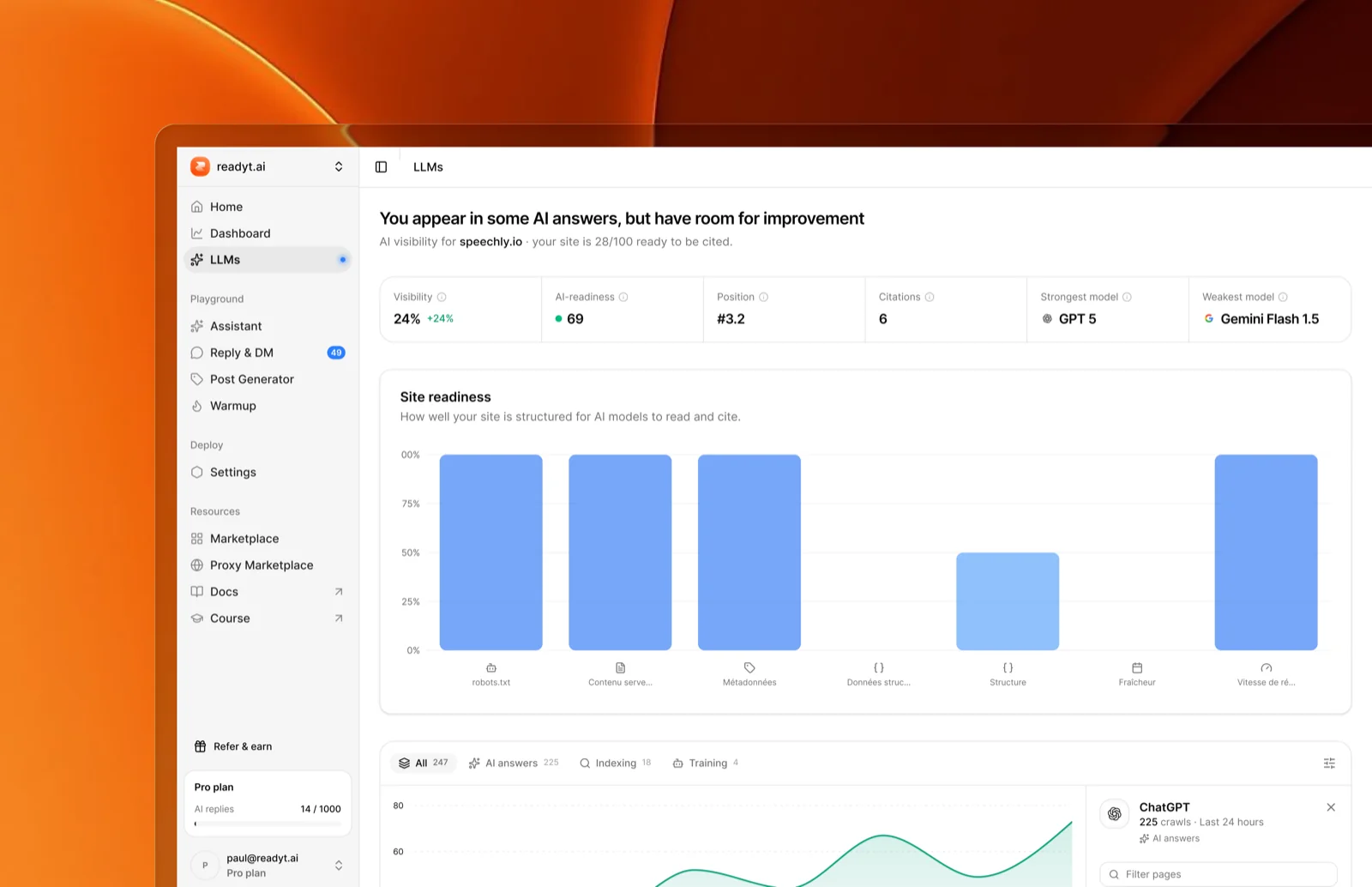
- Report weekly on two numbers: visibility rate and citation share
- Never promise citation timelines you don't control, and never fabricate spammy mentions
The fastest way to sell GEO for agencies is to productize it into three tiers: a one-shot AI visibility audit, a quick-wins sprint, and a monthly measure-and-act retainer. Clients don't buy "generative engine optimization" as a concept. They buy an answer to the question their board is already asking: "what does ChatGPT say about us?"
That question is your entire pitch. Most companies have never run their brand through ChatGPT or Perplexity. The first agency to show them the answer, next to what AI says about their competitors, usually wins the engagement.
Here's how to package, price and deliver it, and the two mistakes that kill GEO retainers.
Why are clients suddenly asking about AI visibility?
Because their buyers moved. When a prospect asks ChatGPT "best [category] tool for [use case]", the AI answer is the shortlist, if your client isn't in it, they lost the deal before their website got a visit. Executives have noticed: the question now comes from boards and CMOs, not from SEO nerds.
There's a structural reason this compounds. AI assistants lean on a small set of trusted sources. Reddit is consistently the most-cited domain across ChatGPT, Perplexity and AI Overviews, and Google has been paying $60M a year for Reddit data since 2024. The sources shaping AI answers are concentrated, identifiable, and mostly ignored by your client's current SEO vendor.
That gap is the agency opportunity. Generative engine optimization is where SEO was in 2005: high demand, low supply of people who can actually deliver.
How do you package GEO for agency clients?
Sell it as a ladder with three rungs. Each one de-risks the next.
Rung 1: The AI visibility audit (one-shot)
Run 30-50 buyer prompts through ChatGPT, Perplexity, Claude and Google AI Overviews. For each prompt, record: is the client mentioned, who is mentioned instead, and which sources the AI cites. The full method is in how to check your AI visibility, productize exactly that.
Deliver a short report: visibility rate, competitor comparison, and the top 10 sources driving the answers. The first audit we ran with an agency partner surfaced nine Reddit threads powering most of the answers, the client had commented in none of them. That one slide closed the retainer.
Rung 2: The quick-wins sprint (30-60 days)
Fix what the audit exposed. Typical quick wins:
- Claim the cited threads. Add honest, substantive answers in the Reddit threads AI already retrieves.
- Fix the comparison content. Publish or update "X vs Y" and "best tools for Z" pages that match prompt phrasing.
- Clean up entity signals. Consistent product descriptions across the site, directories and review platforms.
Rung 3: The monthly retainer (measure + act)
This is the real business. Every month: re-run the prompt set, track movement, execute placements, report. GEO isn't a one-time fix, AI answers shift constantly, which is annoying for clients and excellent for retainers.
Worth knowing what the market already charges for adjacent work: our list of Reddit marketing agencies and services shows the one public rate in the category and how everyone else packages it.
How should agencies price GEO?
Price the audit as the foot in the door and the retainer as the engine. The pattern that converts best:
- Audit: fixed price, low friction. The agencies we work with charge $1,500-$3,000 for a 30-50 prompt audit, roughly one month of retainer. Most credit it fully against the retainer at signature.
- Retainer: anchored to SEO budgets. $2,000-$5,000/month for a 50-prompt scope is the range we see convert. Position it alongside the client's existing SEO line item, not as a discount add-on: you're covering the surface where their buyers now decide.
- Scope by prompt count, not hours. "We track 50 prompts across 4 AI engines and act on the gaps" is legible. "20 hours of GEO work" is not.
We've seen a single honest comment, placed in a thread ChatGPT retrieves, keep resurfacing in answers for months. That compounding is why GEO retainers retain: the work stacks instead of resetting every month.
What goes in the weekly client report?
Two numbers, then actions. Resist the urge to ship a 20-tab dashboard.
- Visibility rate: the percentage of tracked prompts where the client appears in the AI answer, the headline metric everyone understands.
- Citation share: of the sources AI cites for those prompts, how many mention the client versus competitors. This is share of model voice, and it's the leading indicator: citations move before mentions do.
- Actions taken and next up: threads answered, pages shipped, placements earned, and what's queued.
Screenshot the actual AI answers. A "before/after" of ChatGPT recommending the client is worth more than any chart in your deck.
What tools belong in the agency GEO stack?
You need two layers: tracking and execution.
Tracking answers "where do we show up?". Peec AI and Profound monitor brand mentions across AI engines at scale, with the multi-client views agencies need. Semrush's AI toolkit works if the client already lives in Semrush. Full breakdown in the best GEO tools compared.
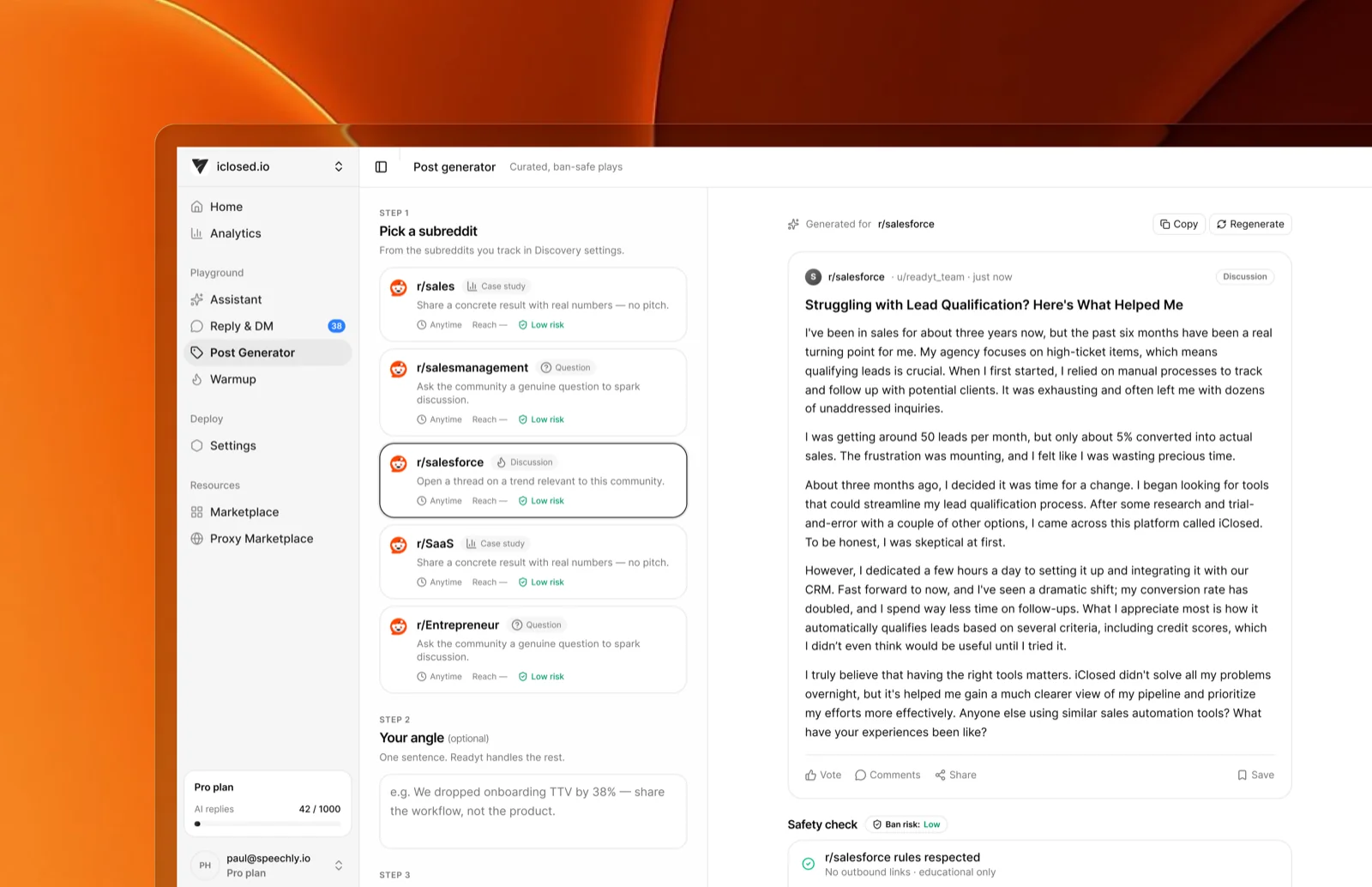
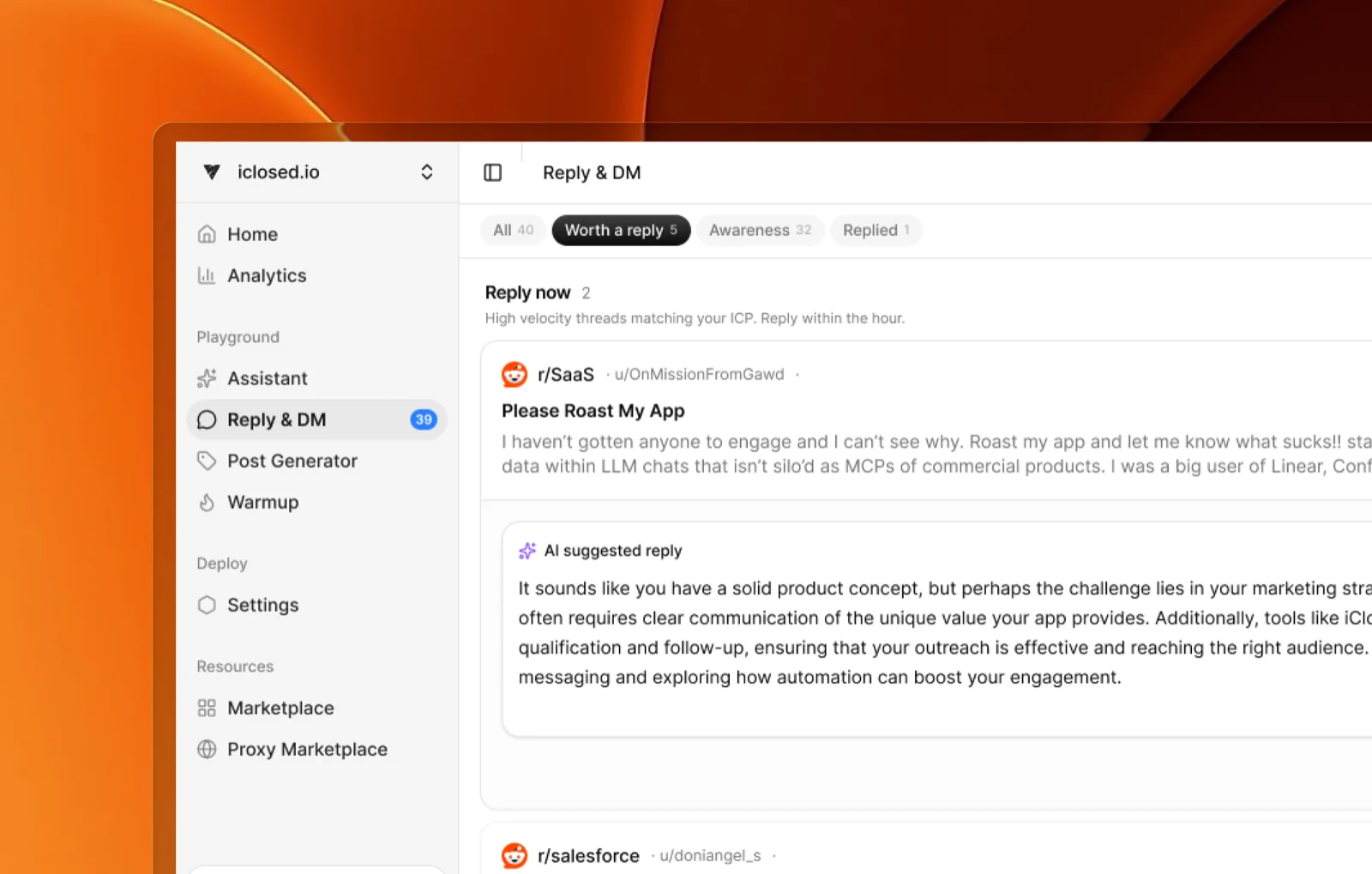
Execution answers "how do we change the answer?". Since Reddit dominates the citation graph for commercial queries, this mostly means Reddit work: finding the threads AI retrieves and earning a credible presence in them. That's the layer Readyt covers: mapping prompts to the exact threads being cited and helping you place clients in them without getting accounts banned. It's Reddit-focused, not a full multi-surface tracker, so most agencies pair it with one.
A tracker without execution produces reports nobody acts on; execution without tracking proves nothing. Sell both or sell neither.
What are the pitfalls when selling GEO?
Two self-inflicted mistakes sink agency GEO offers.
Over-promising timelines. You don't control when a model re-retrieves a source or when training data refreshes. Promise the process and the leading indicators (citations, source presence), never "you'll be in ChatGPT's answer by March."
Fabricating citations. We've watched an agency astroturf a client's niche subreddit: accounts shadowbanned, threads nuked by moderators, and the brand called out by name in the exact communities AI reads. Every placement should survive a moderator reading it twice. Honest comparisons that admit a weakness outperform ads pretending to be advice, on Reddit and in the AI answers built from it.
FAQ
How do agencies price a GEO audit vs a retainer?
Typical audits run $1,500-$3,000 for a defined prompt set with competitor and source analysis; retainers run $2,000-$5,000/month, scoped by prompts tracked and actions executed. Many agencies credit the audit fee against the first month to ease the upsell.
What should a GEO client report include?
Visibility rate (share of tracked prompts where the client appears), citation share versus competitors, screenshots of actual AI answers, and the actions taken that period. Weekly for active sprints, monthly for steady-state retainers.
Can agencies white-label GEO tools?
Most AI visibility trackers, including Peec AI and Profound, offer multi-client workspaces and exportable reports that slot into agency decks. Check per-client pricing carefully: prompt-based pricing scales differently than seat-based pricing when you're running ten client accounts.
How long before clients see GEO results?
Set expectations in two phases. Source-level wins (a comment placed in a cited thread, a comparison page live) show within weeks. Answer-level wins (the client named in ChatGPT's response) typically follow over one to several months, faster on retrieval-heavy engines like Perplexity.

Paul-Marie is the founder of Readyt, the Reddit growth platform for SaaS. He has generated 16K€+ in pre-sales in 2 months using nothing but Reddit, and now helps founders turn Reddit threads into their #1 acquisition channel.